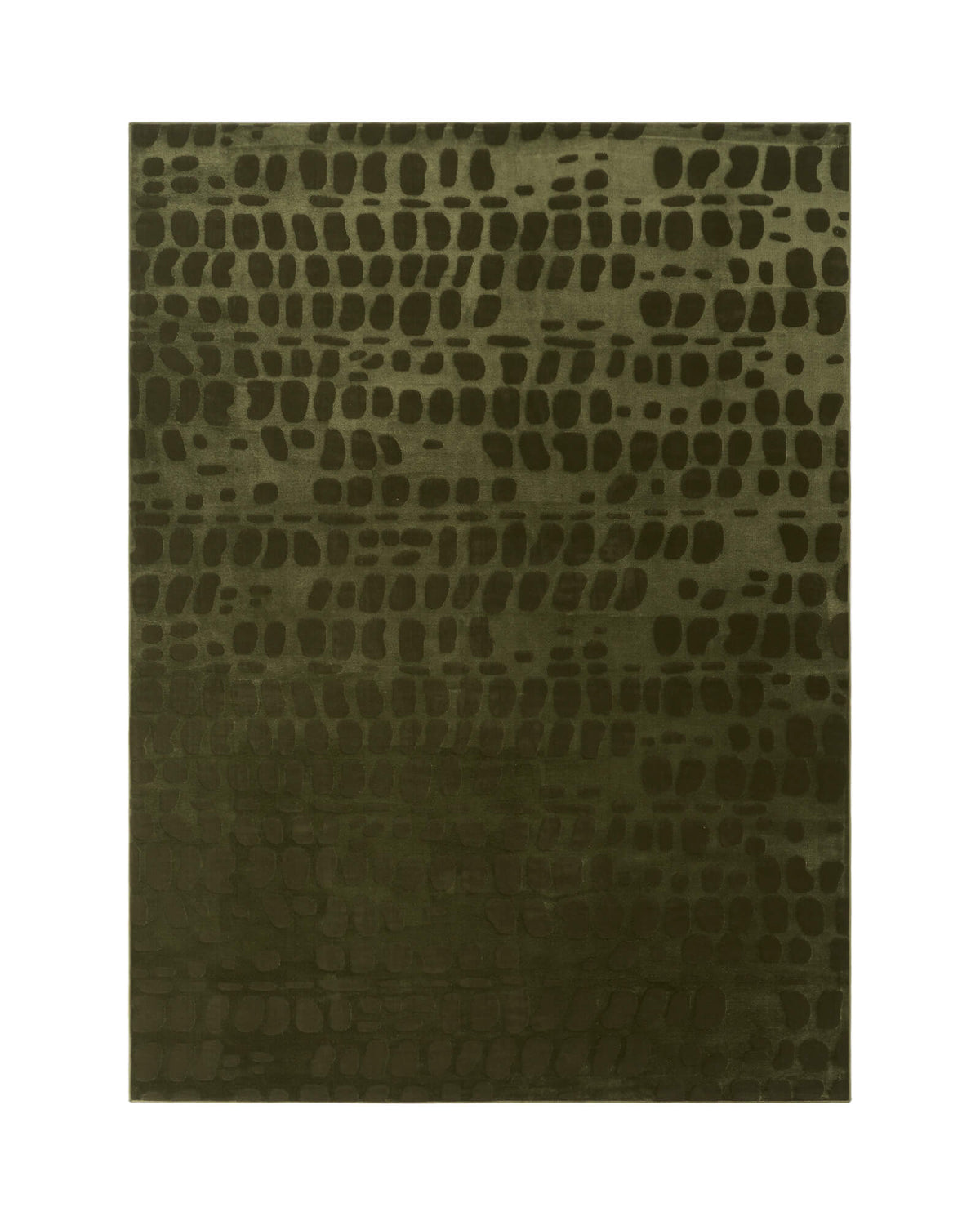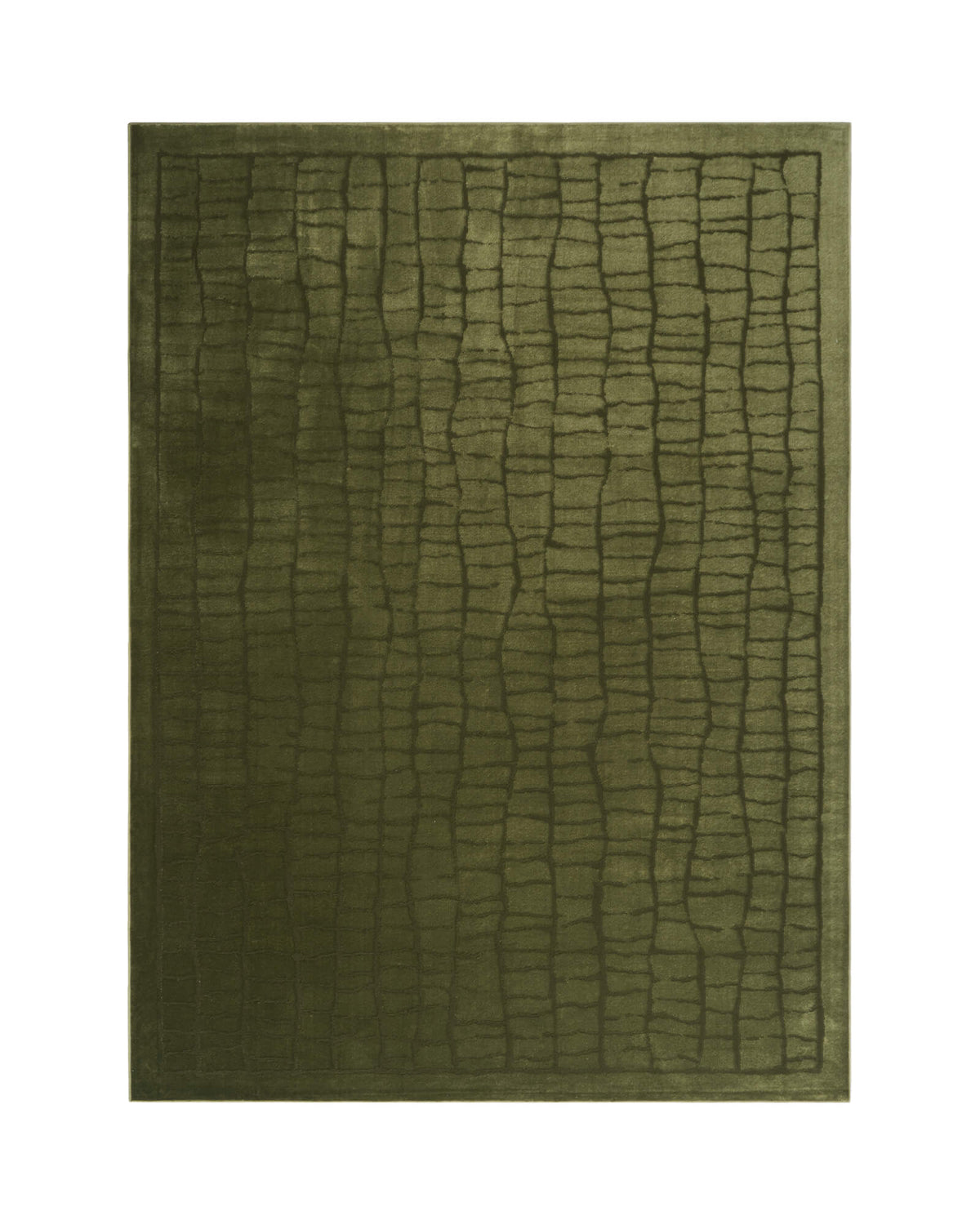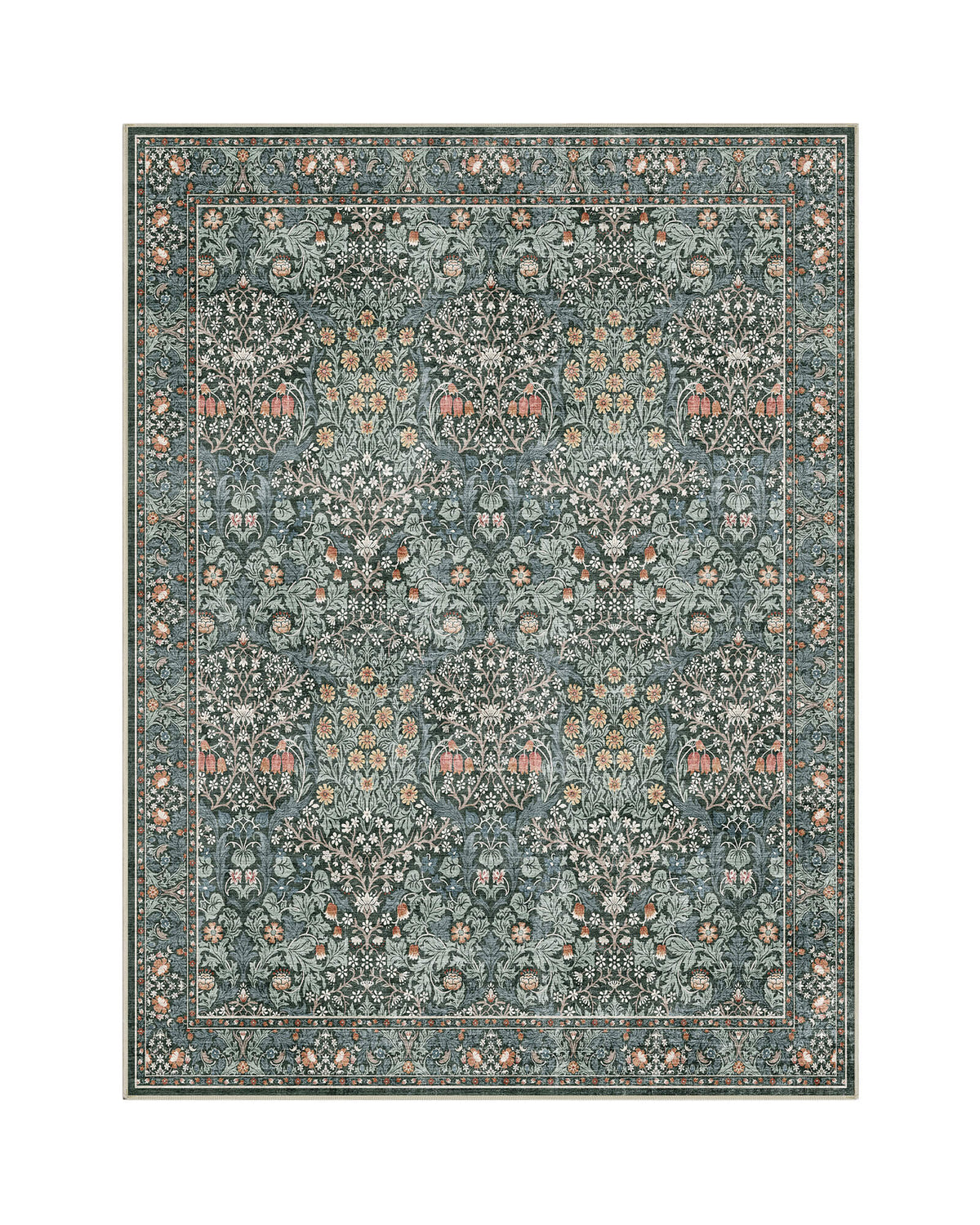
A Guide to Wilton Area Rugs
When choosing an area rug, it's easy to focus on the things you can immediately see: color, pattern, size, and style.
But how a rug is made can be just as important.
One construction method with a long history in rug and carpet making is Wilton weaving. Known for creating structured surfaces and detailed woven patterns, Wilton construction offers a different look and feel from rugs where designs are simply printed onto the surface.
For modern homes, that difference can translate into an area rug with more visible texture, pattern definition, and a substantial woven appearance.
So, what exactly is a Wilton woven rug, and what makes it different?
In this guide, we'll explore:
- What Wilton weaving means
- How Wilton woven rugs are made
- How Jacquard technology is used in rug design
- Wilton woven vs. printed rugs
- Wilton woven vs. tufted rugs
- Why woven construction works beautifully for large area rugs
- How to choose a Wilton woven rug for your home

What Is a Wilton Woven Rug?
A Wilton woven rug is produced on a specialized loom using a weaving process that interlaces yarns to form the rug structure.
Unlike tufted construction, where pile yarns are inserted through a separate primary backing, woven construction brings different yarn systems together on the loom as the rug is being formed.
This is one of the defining characteristics of woven rugs.
Wilton weaving can also work with Jacquard pattern-control technology, allowing different yarns to create detailed patterns and variations across the rug surface.
The result is a rug where the construction itself contributes to the way the pattern and texture appear.
A Brief History of Wilton Weaving
The name Wilton comes from Wilton, England, an area historically associated with carpet weaving.
Over time, developments in power looms and Jacquard technology made it possible to produce increasingly detailed woven carpet patterns by machine.
Wilton eventually became recognized as one of the principal forms of woven carpet construction alongside Axminster and velvet weaving.
Today, modern manufacturing has made it possible to bring this traditional weaving concept into area rugs suited to contemporary homes.
The result doesn't have to feel formal or old-fashioned.
Depending on the yarn, pattern, color palette, and finishing, a Wilton woven area rug can look:
- Vintage
- Traditional
- Transitional
- Minimal
- Organic modern
- Contemporary
That versatility is one reason the construction remains relevant in modern rug design.
How Is a Wilton Woven Rug Made?
The easiest way to understand Wilton construction is to think about the rug as a textile being built through interlacing yarns.
During weaving, lengthwise yarns and widthwise yarns work together on the loom to form the rug structure.
Depending on the specific construction, additional yarn systems can contribute to the pile and overall stability of the finished rug.
Instead of beginning with a separate surface and simply adding a decorative image afterward, the weaving process helps create the physical character of the rug itself.
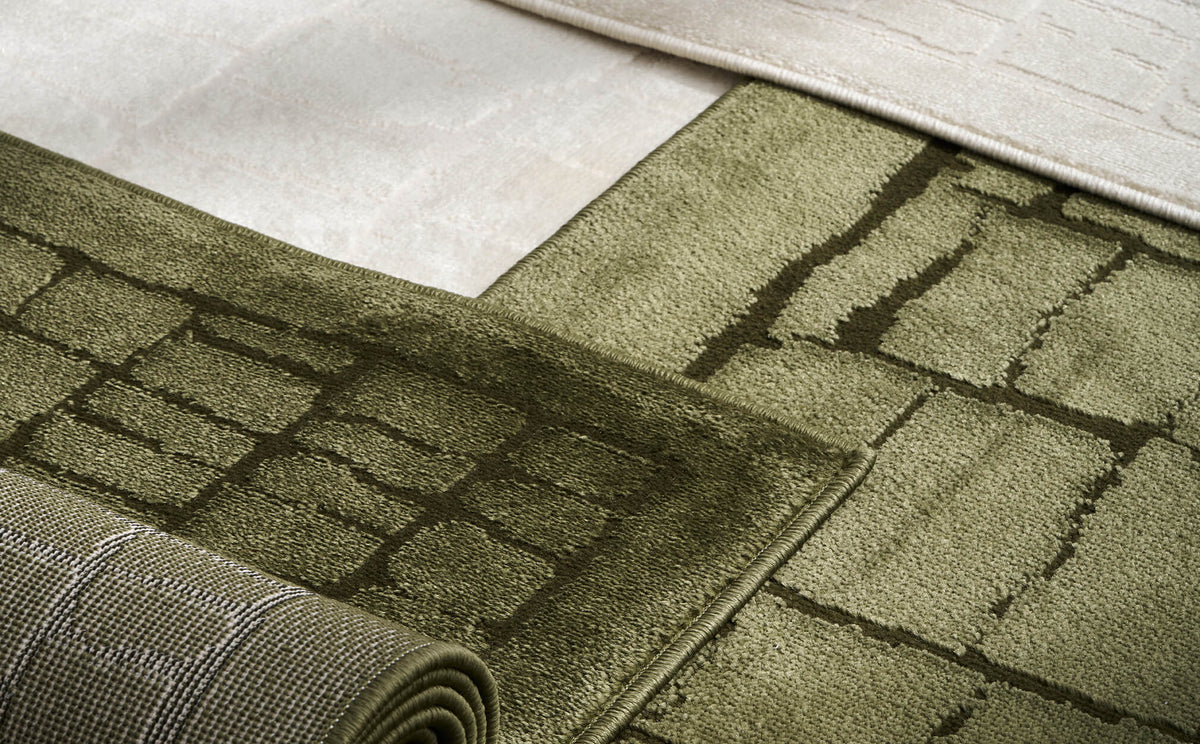
That distinction becomes particularly noticeable when you look closely at the surface.
A woven rug may show subtle changes in:
- Texture
- Yarn direction
- Pattern definition
- Surface depth
- Light and shadow
These details give woven area rugs much of their visual character.
What Does Jacquard Mean in a Wilton Rug?
You'll often see the terms Wilton woven and Jacquard used together.
They are related, but they don't mean exactly the same thing.
Wilton refers to a type of woven rug or carpet construction.
Jacquard refers to a mechanism or pattern-control system that allows the loom to control yarns to produce more complex designs.
In practical terms, Jacquard technology can make it possible to create:
- Detailed ornamental motifs
- Geometric patterns
- Repeating florals
- Decorative borders
- Curved lines
- Layered visual effects
- More complex pattern arrangements
For an area rug, this matters because the pattern can feel more connected to the textile structure rather than appearing only as a flat graphic on the surface.
Wilton Woven Rugs vs. Printed Rugs
One of the easiest ways to understand the appeal of Wilton construction is to compare it with printed rugs.
Neither method is automatically "better." They simply create different products for different needs.
Printed Rugs

With a printed rug, the visual design is applied to the surface of the rug.
Printing makes it possible to create:
- Highly detailed artwork
- Large color variations
- Distressed effects
- Complex vintage-inspired designs
- Lightweight and practical everyday rugs
Printed rugs can be an excellent choice when washability, easy maintenance, and a wide variety of designs are priorities.
Wilton Woven Rugs

With a Wilton woven rug, weaving plays a direct role in creating the surface and pattern.
This can give the rug:
- More visible textile texture
- Greater visual depth
- Defined woven details
- A more structured appearance
- Subtle dimension as light moves across the surface
The difference is especially noticeable in larger rugs, where the woven pattern has more room to develop across the floor.
Wilton Woven Rugs vs. Tufted Rugs
Wilton woven rugs are also different from tufted rugs.
How Tufted Rugs Are Made
In tufted construction, yarn is inserted through a primary backing using needles or tufting equipment.
The pile is created first, and additional backing materials may then be added to help stabilize the finished rug.
Tufting is widely used because it can produce many different textures and styles efficiently.
How Wilton Woven Rugs Are Different
Wilton rugs are produced through weaving rather than inserting pile yarn into an existing primary backing.
This difference affects how the rug is physically constructed and can influence its:
- Surface appearance
- Pattern structure
- Texture
- Overall feel
However, construction alone doesn't determine the quality or durability of a rug.
Fiber type, yarn quality, density, finishing, backing, and intended use are also important.
That's why it's better to think of Wilton weaving as a distinct construction method, rather than assuming every woven rug will automatically outperform every tufted rug.
Why Wilton Weaving Works So Well for Area Rugs
Large area rugs occupy a significant amount of visual space.
A 5' x 7', 6' x 9', 8' x 10', or 9' x 12' rug can become one of the largest decorative elements in a room.
That makes surface detail especially important.
Wilton weaving gives designers another way to introduce character beyond color alone.
1. Woven Texture Adds Visual Depth
A flat image and a woven textile interact with light differently.
When yarns create subtle surface variation, the appearance of the rug can shift slightly depending on:
- Viewing angle
- Natural light
- Room lighting
- Furniture placement
This gives a large rug more dimension without requiring an overly bold pattern.
For neutral interiors in particular, texture can become part of the design.
A beige or cream rug doesn't need dramatic color contrast when its woven surface already provides visual interest.
2. Detailed Patterns Work Beautifully at a Larger Scale
Area rugs provide a large canvas for pattern.
Wilton and Jacquard weaving can be particularly effective for designs such as:
- Floral motifs
- Medallions
- Geometric forms
- Flowing curves
- Repeating botanicals
- Decorative borders
- Abstract lines
- Tonal patterns
On an 8' x 10' or 9' x 12' rug, these elements can become part of the architecture of the room rather than simply decoration underneath furniture.
3. Woven Designs Can Feel More Subtle
Not every statement rug needs strong color.
One of the advantages of woven design is that pattern can also come from texture and yarn interaction.
Imagine a warm beige rug with flowing curved lines woven into the surface.
From a distance, it may look calm and minimal.
As you move closer, the woven details become more noticeable.
This makes textured Wilton rugs especially suitable for styles such as:
- Organic modern
- Warm contemporary
- Minimal
- Japandi
- Transitional
- Modern neutral interiors
4. It Works with Traditional Designs Too
Wilton weaving isn't limited to modern rugs.
Its ability to create controlled patterns also makes it well suited to traditional and vintage-inspired designs.
A large woven rug can incorporate:
- Central medallions
- Ornamental borders
- Floral vines
- Repeating motifs
- Classic geometric elements
Combined with softer colors or a gently aged visual treatment, these patterns can bring traditional character into a modern home without making the space feel overly formal.
Where to Use a Wilton Woven Area Rug
A large woven rug can help anchor furniture while bringing additional texture into a room.
Living Room
The living room is one of the most natural places for a Wilton woven area rug.
An 8' x 10' or 9' x 12' rug can help visually connect:
- Sofa
- Accent chairs
- Coffee table
- Side tables
For a balanced arrangement, consider placing at least the front legs of the main seating furniture on the rug.
The woven pattern then becomes the visual foundation for the entire conversation area.
Bedroom
A large rug underneath the bed adds softness and helps frame the sleeping area.
Neutral woven patterns work particularly well here because they add interest without making the room feel visually busy.
Depending on your bed and room dimensions, an 8' x 10' or 9' x 12' rug can provide generous coverage around the sides and foot of the bed.
Dining Room
A woven area rug can help define a dining zone, particularly in an open-plan home.
Choose a rug large enough for the dining chairs to remain comfortably on the rug when pulled away from the table.
Patterns can also help give a dining area more character while visually connecting the table and chairs.
Home Office
For an office, woven texture can introduce warmth to a room that might otherwise feel overly functional.
A low-profile area rug underneath the desk can visually define the workspace while adding another layer of design.
How to Choose a Wilton Woven Area Rug
Construction is important, but it shouldn't be the only factor you consider.
Think about how the rug will actually work in your room.
Consider the Size First
Before choosing the pattern, measure your furniture arrangement.
Common area rug sizes include:
- 5' x 7' — smaller rooms and compact furniture arrangements
- 6' x 9' — bedrooms, offices, and medium seating areas
- 8' x 10' — standard living rooms, bedrooms, and dining spaces
- 9' x 12' — larger living rooms and open furniture arrangements
A rug that is appropriately scaled to the furniture usually makes a greater visual impact than a beautiful rug that's too small for the room.
Look at the Pattern Scale
For large rooms, medium-to-large patterns can create a stronger visual foundation.
For smaller or heavily furnished rooms, quieter patterns may prevent the space from feeling crowded.
Think About Color and Texture Together
If your furniture already contains several colors and patterns, consider a more restrained rug.
If your room is primarily neutral, a textured or patterned Wilton rug can become the focal point.
Beige, brown, cream, gray, and other natural tones are especially useful when you want the woven texture to do more of the visual work.
Match the Rug to Your Lifestyle
Construction is only one part of choosing an area rug.
Also consider:
- Cleaning requirements
- Foot traffic
- Children and pets
- Furniture placement
- Floor type
- How frequently the room is used
A beautiful rug should work with your everyday routine—not against it.
Are Wilton Woven Rugs Durable?
Wilton weaving creates an integrated woven structure, but it's important not to judge durability based on the word "Wilton" alone.
A rug's long-term performance also depends on factors such as:
- Fiber
- Yarn construction
- Weave density
- Pile structure
- Finishing
- Backing
- Care
- Amount of foot traffic
This is why two Wilton woven rugs can perform differently even though they use the same general manufacturing method.
When shopping, look at the complete product specifications rather than construction alone.
Are Wilton Rugs the Same as Handmade Rugs?
No.
This is an important distinction.
Wilton weaving is a machine-woven construction, while handmade rugs may be:
- Hand-knotted
- Hand-woven
- Hand-tufted
Modern Wilton looms allow manufacturers to create detailed woven designs efficiently and consistently.
The result can have some of the visual depth people associate with traditional textile craftsmanship, but a Wilton woven rug should not be described as handmade unless it genuinely includes a handmade process.
Are Wilton Woven Rugs Expensive?
Not necessarily.
Historically, woven carpet has often been associated with more elaborate manufacturing, but modern production means Wilton construction can now appear across different price ranges.
Price depends on much more than weaving method, including:
- Rug size
- Fiber
- Yarn quality
- Pattern complexity
- Density
- Finishing
- Brand and manufacturing process
For homeowners, this means a woven look doesn't have to be reserved only for formal or luxury interiors.
Wilton Woven Rugs in Modern Homes
Perhaps the most interesting thing about Wilton weaving is how easily an established rug-making technique can adapt to modern design.
Today, homeowners aren't necessarily looking for rooms that feel perfectly formal.
They want spaces that feel:
- Comfortable
- Warm
- Personal
- Practical
- Lived-in
A woven area rug fits naturally into that approach.
The pattern can be traditional or modern. The palette can be colorful or neutral. The room can be carefully styled or comfortably imperfect.
What the woven construction adds is another layer of texture and detail beneath everyday life.
FAQs About Wilton Woven Rugs
What is a Wilton woven rug?
A Wilton woven rug is produced on a loom using a weaving process in which yarn systems are interlaced to create the rug structure. Wilton looms can also use Jacquard pattern-control technology to produce detailed designs.
Is a Wilton rug woven or tufted?
Wilton is a woven construction. Tufted rugs use a different process in which pile yarn is inserted through a primary backing.
Is a Wilton rug the same as a Jacquard rug?
Not exactly. Wilton refers to the woven construction, while Jacquard refers to technology used to control yarns and create patterns. The two can be used together.
Are Wilton rugs good for living rooms?
They can be an excellent choice for living rooms. Their woven texture and pattern definition work particularly well on larger rug sizes that anchor sofas, chairs, and coffee tables.
Are Wilton woven rugs handmade?
No. Wilton rugs are machine woven. They should not be confused with hand-knotted, hand-woven, or hand-tufted rugs.
Are Wilton woven rugs better than printed rugs?
Neither is universally better. Wilton woven rugs offer textile texture and woven pattern definition, while printed rugs can provide extensive design flexibility and practical features depending on their construction.
What size Wilton rug should I choose for a living room?
For many living rooms, an 8' x 10' rug provides good coverage, while larger seating arrangements may benefit from a 9' x 12'. Always measure your furniture layout before choosing.
Can Wilton woven rugs have modern patterns?
Yes. Wilton weaving isn't limited to traditional patterns. Modern designs can include flowing lines, geometric forms, tonal textures, abstract motifs, and minimalist patterns.
Final Thoughts
A beautiful area rug isn't defined by pattern alone.
How the rug is constructed can influence its texture, dimension, and overall presence in a room.
Wilton weaving brings together an established weaving technique and modern pattern technology to create area rugs with detailed surfaces and distinctive woven character.
For large rugs in particular, this construction gives pattern and texture more room to become part of the interior itself.
From a softly textured neutral rug underneath a modern sofa to an ornate vintage-inspired design anchoring a traditional living room, Wilton woven area rugs can adapt to many different ways of living.
It's not simply about choosing something decorative for the floor.
It's about choosing a foundation that brings the entire room together.
Related Articles
- What Size Area Rug for a Living Room?
- How to Position a Rug in a Living Room
- How to Choose Rug Color
- Best Rugs for High-Traffic Areas
Explore MontVooRugs Area Rugs
Discover area rugs designed to bring warmth, texture, and character to everyday spaces.
From vintage-inspired patterns to understated modern designs, find a rug that helps bring your room together.
👉 Shop Area Rugs:
https://montvoorugs.com/collections/area-rug