A Complete Placement Guide
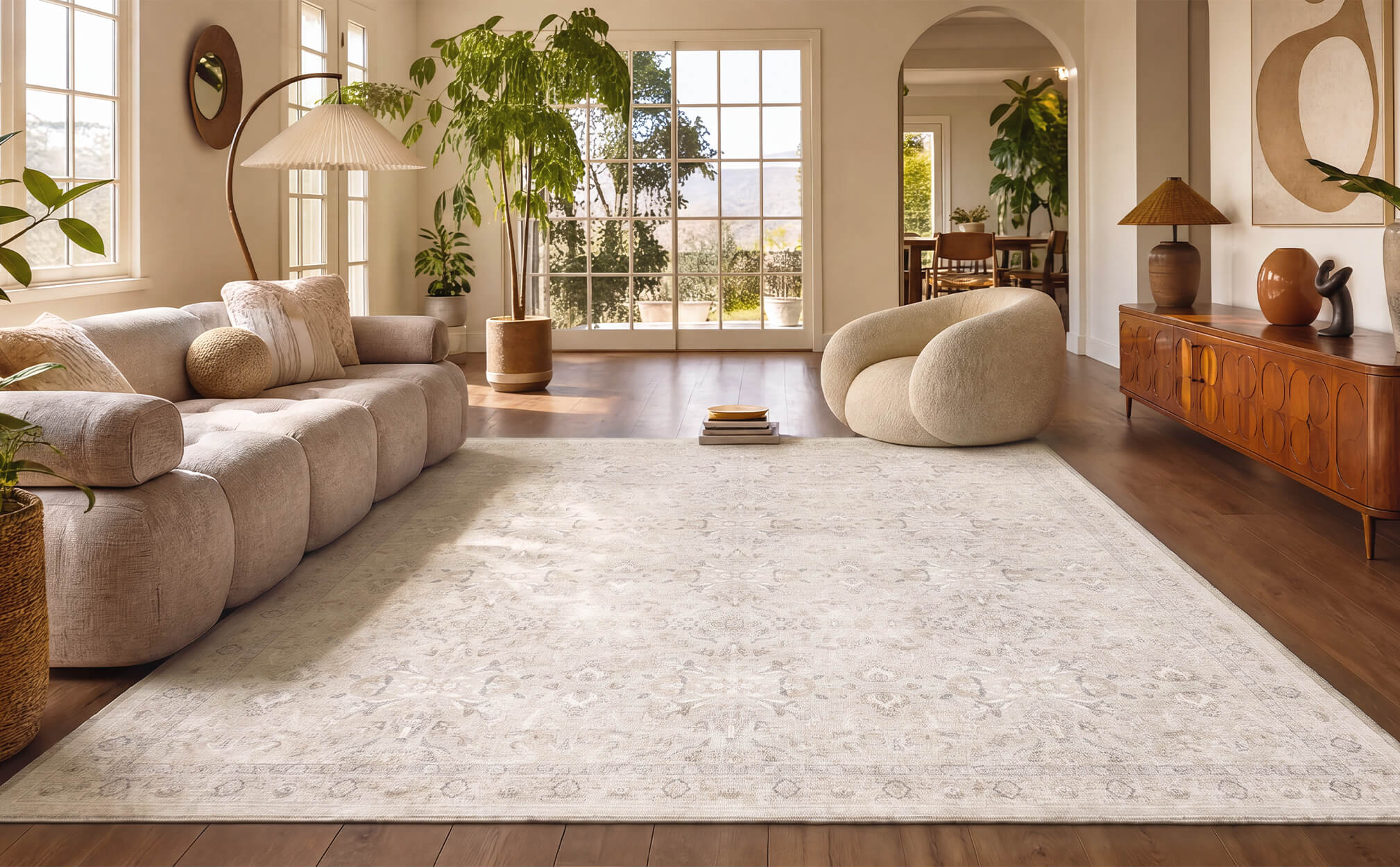
An area rug can completely change the way a living room looks and feels. Beyond adding color, pattern, and softness, the right rug placement helps connect your sofa, chairs, and coffee table into one comfortable and balanced seating area.
But where exactly should a rug go in a living room?
Should the sofa sit completely on the rug? Is it okay to place only the front legs on it? And how far should the rug extend beyond your furniture?
There isn't one placement that works for every room. The best position depends on your rug size, furniture arrangement, room dimensions, and the overall look you want to create.
In this guide, you'll learn:
-
How to position a rug in a living room
-
The three most common rug placement layouts
-
How to place a rug with a sectional
-
How much rug should extend beyond your furniture
-
Common placement mistakes to avoid
-
How to choose the right rug for everyday living
Why Rug Placement Matters in a Living Room
A living room rug acts as a visual anchor for your furniture.
When positioned correctly, it can:
-
Define the seating area
-
Connect separate pieces of furniture
-
Make the room feel more balanced
-
Add warmth and softness underfoot
-
Create a more intentional layout
-
Help an open floor plan feel organized
When a rug is positioned incorrectly—especially when it's too small or sits too far away from the furniture—the room can feel disconnected.
The goal is to make the rug feel like part of the furniture arrangement rather than a separate decorative piece.
Before Positioning Your Rug, Look at the Entire Room
Before moving furniture, take a moment to look at the overall layout.
Consider:
-
Room dimensions
-
Sofa size
-
Number of chairs
-
Coffee table placement
-
Doorways
-
Walking paths
-
Fireplace or TV location
-
Other furniture in the room
Your rug should support the natural flow of the space rather than interfere with it.
If you're buying a new rug, measure the room and furniture arrangement before choosing a size.
Option 1: Place All Furniture on the Rug

Placing the entire seating arrangement on the rug creates one of the most cohesive living room layouts.
The sofa, chairs, and coffee table all sit completely within the rug.
Best For
This arrangement works especially well in:
-
Large living rooms
-
Open floor plans
-
Spacious family rooms
-
Formal seating areas
Why It Works
A large rug visually connects all of the furniture and clearly defines the seating area.
It can also make a large room feel warmer and more intentional.
For this arrangement, larger rug sizes such as 9' x 12' are often more suitable, depending on the dimensions of your furniture and room.
Option 2: Place the Front Legs of the Sofa on the Rug

This is one of the most versatile and popular living room rug placements.
Instead of placing the entire sofa on the rug, position it so that only the front legs rest on the rug.
The coffee table should generally sit completely on the rug, while accent chairs can also have their front legs resting on it.
Best For
This layout works well in:
-
Small to medium living rooms
-
Apartments
-
Standard family rooms
-
Rooms with an 8' x 10' area rug
Why It Works
The rug still connects the furniture visually without requiring an oversized rug.
It creates a balanced transition between the flooring, rug, and furniture while keeping the seating area feeling unified.
Option 3: Place the Rug in the Center of the Seating Area

In smaller living rooms, you may choose to position a smaller rug in the center of the furniture arrangement.
The coffee table sits on the rug while the sofa and chairs remain off it.
Best For
This setup can work in:
-
Compact apartments
-
Small living rooms
-
Conversation areas
-
Rooms where furniture sits close together
However, proportion is especially important.
If the rug is significantly smaller than the seating arrangement, it can look like it's floating in the middle of the room.
Whenever possible, choose a rug large enough to visually connect with the surrounding furniture.
How to Position a Rug with a Sectional Sofa
Sectional sofas create larger seating zones, so rug placement becomes particularly important.
For a Small Sectional
An 8' x 10' rug can often work well.
Position the rug so that:
-
The front legs of the sectional sit on it
-
The coffee table is centered on the rug
-
The rug extends beyond the inner seating area
For a Large Sectional
Consider a 9' x 12' rug or larger, depending on your room.
A larger rug can extend underneath more of the sectional and help balance its visual weight.
Avoid placing a very small rug in front of a large sectional. The difference in scale can make the room feel unbalanced.
How Far Should a Rug Extend Beyond a Sofa?
Ideally, your rug shouldn't end exactly at the edges of your sofa.
Allowing some rug to extend beyond the sofa helps the arrangement feel more spacious and intentional.
A useful starting point is approximately 6–12 inches beyond each side of the sofa, although larger rooms may benefit from even more.
The exact measurement isn't a strict rule. Proportion and visual balance matter more than following one number in every room.
How Much Floor Should Show Around a Living Room Rug?
A living room rug usually looks best when some of the original flooring remains visible around it.
Depending on your room size, approximately 8–24 inches of visible floor around the perimeter can create a natural border.
Smaller rooms may need less space, while larger rooms can accommodate a wider border.
Try to keep the spacing reasonably consistent so the rug doesn't look accidentally pushed toward one side of the room.
Should the Coffee Table Be Centered on the Rug?
In most layouts, yes.
Centering the coffee table on the rug helps establish a clear focal point for the seating area.
However, you should consider the furniture arrangement as a whole rather than centering the rug based only on the room itself.
For example, if your sofa and chairs form a seating area toward one side of a large open room, center the rug within the seating arrangement, not necessarily within the entire room.
How to Position a Rug in an Open Floor Plan
Rugs are particularly useful in open-concept homes because they can visually separate different functional areas without walls.
For example, one large space might contain:
-
Living area
-
Dining area
-
Kitchen
-
Reading corner
Position your living room rug underneath or partially underneath the seating furniture to create a clear visual boundary.
The rug essentially tells the eye:
This is the living area.
If you're using multiple rugs in an open space, they don't need to match exactly. Instead, coordinate their colors, patterns, or overall style so the room still feels connected.
How to Position a Rug in a Small Living Room
In a small room, it's tempting to choose the smallest rug possible.
However, an undersized rug can actually make the room feel smaller.
Instead, consider a rug large enough to reach underneath the front legs of your sofa.
This helps visually expand the seating area and makes the furniture arrangement feel more connected.
Light colors and softly distressed patterns can also help create a more open appearance.
How to Position a Rug in a Large Living Room
Large rooms need enough rug coverage to match the scale of the furniture.
A small rug surrounded by large sofas and chairs may feel disconnected.
For spacious living rooms:
-
Use a larger area rug
-
Include multiple furniture pieces on the rug
-
Center the rug around the seating arrangement
-
Maintain visible flooring around the perimeter
A 9' x 12' rug can work well for many larger layouts, although the ideal size always depends on your actual room and furniture dimensions.
Consider Walking Paths Around the Rug
Good rug placement isn't only about appearance.
Think about how people actually move through your living room.
Avoid positioning rug edges in awkward high-traffic locations where people constantly step directly onto and off the edge.
Pay particular attention to:
-
Doorways
-
Paths between rooms
-
Routes around the sofa
-
Entry points into the seating area
A thoughtful layout makes the room feel more natural and comfortable to use.
Common Living Room Rug Placement Mistakes
Choosing a Rug That's Too Small
This is one of the most common mistakes.
A rug that only fits underneath the coffee table can sometimes make a larger seating arrangement feel disconnected.
Whenever possible, use the rug to visually connect your major furniture pieces.
Pushing the Rug Too Far Under the Sofa
If almost the entire rug disappears underneath your furniture, you lose much of its decorative impact.
Leave enough of the rug visible to show its color, texture, and pattern.
Centering the Rug in the Room Instead of the Furniture
The rug should usually relate to your seating arrangement first.
In an asymmetrical or open layout, the center of the seating area may be very different from the center of the room.
Ignoring Doors and Walkways
Make sure your rug doesn't interfere with doors or create awkward transitions in busy walking areas.
Choosing Style Without Considering Everyday Use
Living rooms are often among the busiest spaces in the home.
A beautiful rug should also be practical enough for your lifestyle.
What Type of Rug Works Best in a Living Room?
Besides size and placement, consider how the rug will perform every day.
For busy living rooms, practical features include:
Machine Washable Construction
Living rooms are where spills, snacks, pets, kids, and everyday messes happen.
A washable rug makes deeper cleaning easier.
Non-Slip Backing
A non-slip backing helps reduce unwanted movement and keeps the rug more stable on the floor.
Low-Pile Design
Low-pile rugs are easier to vacuum and maintain, making them a practical choice for frequently used spaces.
Soft-Touch Surface
Your living room should feel comfortable and inviting. A soft rug adds another layer of comfort underneath your seating area.
At MontVooRugs, our area rugs are designed around everyday living with machine washable construction, non-slip backing, soft-touch comfort, easy maintenance, and kid & pet friendly materials.
👉 Shop Washable Area Rugs:
https://montvoorugs.com/collections/area-rug
FAQs About Living Room Rug Placement
Where should a rug be positioned in a living room?
The rug should generally be centered around the main seating arrangement. Depending on the rug size, all furniture or at least the front legs of the sofa and chairs can sit on the rug.
Should a living room rug go under the couch?
It doesn't need to go completely underneath the couch. One of the most popular layouts places only the front sofa legs on the rug.
Should all furniture be on a living room rug?
Not necessarily. In larger rooms, placing all furniture on the rug creates a cohesive look. In smaller rooms, having only the front furniture legs on the rug works well.
How far should a rug go under a couch?
There isn't one required measurement, but the rug should extend far enough underneath the sofa to feel securely connected to the seating arrangement rather than barely touching the legs.
Should a rug be centered with the room or the couch?
In most cases, center the rug according to the main seating arrangement rather than automatically centering it within the entire room.
Is it better for a living room rug to be too big or too small?
A slightly larger rug is generally easier to style than one that's noticeably too small. The rug should visually connect the main furniture rather than appear isolated.
What size rug works best in a living room?
Common living room sizes include 5' x 7', 6' x 9', 8' x 10', and 9' x 12'. An 8' x 10' rug works well in many medium-sized living rooms, while larger layouts may benefit from a 9' x 12' rug.
Final Thoughts
There is no single perfect rug position for every living room.
The best placement depends on your:
-
Room dimensions
-
Rug size
-
Sofa and chair arrangement
-
Walking paths
-
Overall decorating style
For most homes, placing the front legs of the sofa and chairs on the rug is a versatile starting point. Larger rooms can accommodate all furniture on the rug, while compact spaces may use a smaller centered arrangement.
Most importantly, think of the rug as the foundation of your seating area.
When your furniture and rug feel connected, the entire living room feels warmer, more balanced, and more inviting.
Related Articles
-
What Size Area Rug for a Living Room?
-
How to Choose Rug Color
-
How to Match Rugs with Floor Colors
-
What Color Rug Matches a Grey Couch?
-
What Color Rug Matches a Brown Couch?
-
Pet-Friendly Rugs for Living Room
Shop Living Room Area Rugs
MontVooRugs washable area rugs are designed to bring comfort and easy maintenance to everyday living spaces.
Features include:
-
Machine washable construction
-
Non-slip backing
-
Soft-touch surface
-
Low-pile design
-
Easy everyday maintenance
-
Kid & pet friendly
-
Vintage, floral, boho, abstract, and modern styles
👉 Shop Area Rugs:
https://montvoorugs.com/collections/area-rug
👉 Related Blogs:
What Size Area Rug for Living Room?
Pet-Friendly Rugs for Living Room
How to Choose Rug Color