A Complete Guide to Drying Rugs Safely
Washable rugs make everyday cleaning easier. From muddy paw prints to accidental spills, being able to wash your rug at home is a convenient feature for busy households.
But once the washing cycle finishes, another question comes up:
Can you dry washable rugs in the dryer, or should you let them air dry?
The answer depends on the rug's material, backing, construction, and care instructions.
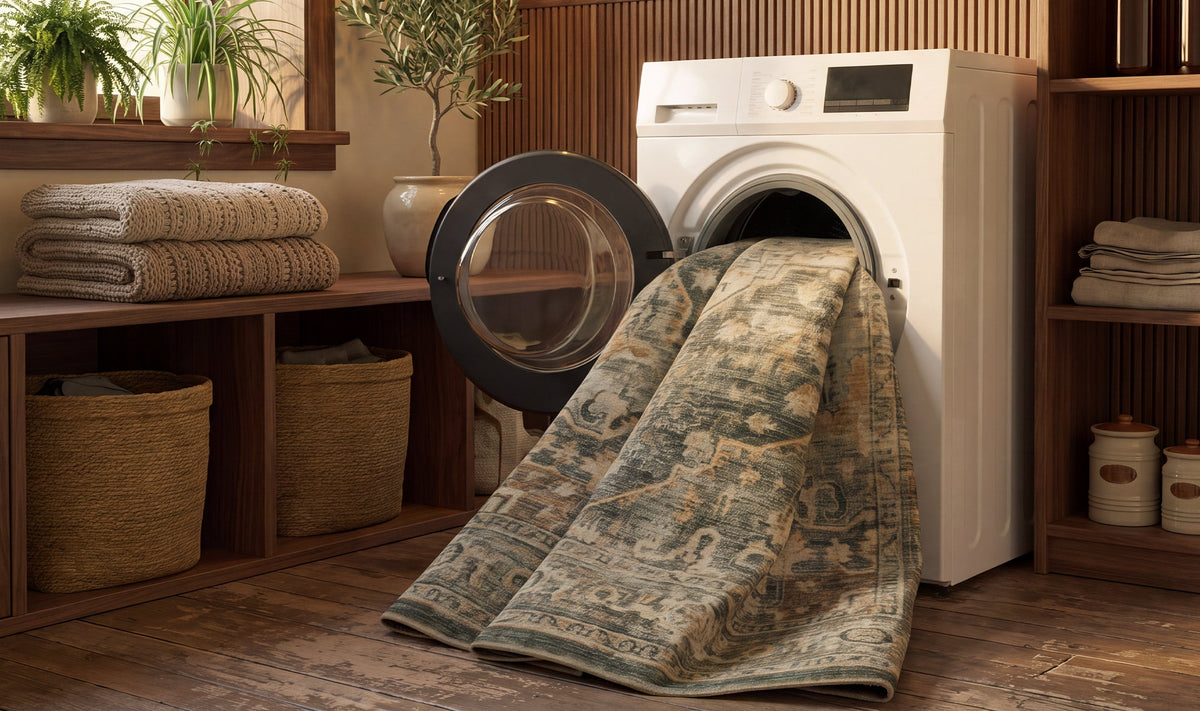
Some washable rugs can be tumble dried using a low-heat or no-heat setting, while others should be air dried to help protect their fibers and backing.
The most important rule is simple: machine washable doesn't automatically mean dryer safe.
In this guide, we'll explain:
-
Whether washable rugs can go in the dryer
-
The difference between tumble drying and air drying
-
How to dry a washable rug step by step
-
How to dry large area rugs
-
How long washable rugs take to dry
-
How to protect non-slip backing
-
Common drying mistakes to avoid
-
How to tell when your rug is completely dry
Can You Put Washable Rugs in the Dryer?
Yes, some washable rugs can go in the dryer—but not all of them.
Whether a rug is dryer safe depends on its specific construction and the manufacturer's care instructions.
For example, washable rugs may contain:
-
Polyester or other synthetic fibers
-
Integrated non-slip backing
-
Waterproof barrier layers
-
Removable rug covers
-
Different backing adhesives or coatings
These components may respond differently to heat.
A rug's upper surface might tolerate a certain temperature while its backing requires more careful handling.
That's why checking the care label is essential.
What Does Dryer Safe Mean?
If a rug is labeled dryer safe, it means the manufacturer permits tumble drying under specified conditions.
Those conditions may include:
-
Low heat
-
No heat or air-only drying
-
A particular drying cycle
-
Restrictions on dryer capacity
Never assume that a higher temperature will simply dry the rug faster without consequences.
Air Drying vs. Tumble Drying: Which Is Better?
Both methods have advantages, but they aren't interchangeable for every rug.
| Drying Method | Advantages | Considerations |
|---|---|---|
| Air drying | No direct dryer heat; suitable for many heat-sensitive constructions | Requires space, airflow, and sufficient drying time |
| No-heat tumble drying | Can help circulate air when permitted | Requires dryer approval and adequate drum capacity |
| Low-heat tumble drying | Convenient and potentially faster when approved | Heat may affect certain fibers or backing materials |
| High-heat tumble drying | Faster for some textiles | Generally unsuitable unless specifically permitted by the rug manufacturer |
For rugs with integrated backing or waterproof layers, air drying is often the more conservative option when the care label permits it.
If your rug is approved for tumble drying, follow the specified temperature and cycle.
How to Air Dry a Washable Rug: Step by Step
Air drying is a practical method for many washable rugs.
The key is to provide enough airflow while keeping the rug properly supported.
Step 1: Remove Excess Water
After washing, allow the machine's approved spin cycle to remove excess water.
Avoid twisting or wringing the rug by hand.
A large wet rug can be surprisingly heavy, and aggressive twisting may place unnecessary stress on its construction.
Step 2: Choose a Well-Ventilated Area
Select a clean space with good airflow.
Depending on the rug's care instructions, this may be:
-
A covered outdoor area
-
A well-ventilated laundry room
-
A drying area with adequate space
-
A clean, shaded location outdoors
Good airflow helps moisture evaporate more efficiently.
Step 3: Support the Rug Properly
Don't hang a large, heavy wet rug from one narrow point.
The weight of the water may cause stretching or distortion.
Instead, spread the rug across a suitable drying surface or support it evenly over a sturdy drying rack.
Make sure air can circulate around the rug.
Step 4: Allow Both Sides to Dry
The upper surface may feel dry before the underside is completely dry.
This is particularly important for washable rugs with non-slip backing or additional barrier layers.
Check both the front and back.
If the rug's care instructions permit it, reposition or turn it during drying to improve airflow.
Step 5: Check Before Reinstalling
Before placing your rug back on the floor, confirm that:
-
The surface feels dry
-
The underside is dry
-
No damp areas remain near the edges
-
There is no trapped moisture in folded sections
-
The rug has returned to its normal shape
Never place a damp rug directly onto hardwood or other moisture-sensitive flooring.
How to Tumble Dry a Washable Rug
If your rug's care label specifically permits tumble drying, follow these steps.
Step 1: Check Dryer Capacity
A wet rug can be much heavier than a dry rug.
Make sure your dryer has sufficient capacity and the rug can move without being tightly compressed.
Never force a large rug into a dryer that's too small.
Step 2: Choose the Recommended Temperature
Use the exact temperature setting permitted by the manufacturer.
If the care label specifies low heat, do not substitute medium or high heat.
If it specifies air-only drying, select a no-heat setting.
Step 3: Avoid Overdrying
Check the rug periodically if the drying instructions allow.
Excessive exposure to heat may affect certain fibers, coatings, or backing materials.
Step 4: Remove and Inspect
Once the cycle is complete, inspect the rug.
Pay attention to:
-
Edges
-
Corners
-
Backing
-
Remaining damp areas
-
Changes in shape
If the rug is still slightly damp, complete drying using a manufacturer-approved method before returning it to the floor.
Can You Dry Washable Rugs with Non-Slip Backing?
Yes, washable rugs with non-slip backing can be dried, but the drying method matters.
Non-slip backing may be made from different materials, and some are more sensitive to heat than others.
Excessive heat can potentially affect:
-
Backing flexibility
-
Surface grip
-
Coatings
-
Bonding between layers
-
Overall rug shape
For this reason, avoid high-heat drying unless the manufacturer explicitly permits it.
MontVooRugs washable area rugs feature a low-pile surface, integrated non-slip backing, and a waterproof barrier.
When drying these rugs, follow the care label for the specific product and make sure the backing is completely dry before reuse.
How to Dry Large Washable Area Rugs
Large washable rugs require additional planning.
An 8' x 10' or 9' x 12' rug can hold a substantial amount of water after washing.
Even when a rug is labeled machine washable, that doesn't mean it will fit safely into every household dryer.
Use a Large Enough Drying Area
Choose a clean space where the rug can be spread out without excessive folding.
Tightly folded sections may remain damp longer.
Prioritize Airflow
Good airflow can make a significant difference.
If you're drying indoors, a fan or dehumidifier may help reduce drying time.
Avoid placing the rug directly against a heater or other concentrated heat source.
Support the Weight Evenly
A wet area rug can be heavy.
Use a sturdy drying surface that supports the rug without pulling excessively on its edges.
Check the Backing Carefully
Large rugs may appear dry on top while the underside remains damp.
Before reinstalling, inspect several sections rather than checking only one corner.
Consider Professional Cleaning Facilities
If your rug is too large for your household washing and drying equipment, a professional rug cleaner or suitable commercial facility may be more practical.
Always confirm that their cleaning and drying methods are appropriate for the rug's construction.
How Long Does It Take a Washable Rug to Dry?
There isn't one universal drying time.
The amount of time needed depends on several factors:
-
Rug size
-
Thickness
-
Fiber material
-
Backing construction
-
Amount of water remaining after washing
-
Temperature
-
Humidity
-
Air circulation
-
Drying method
A small, lightweight rug in a warm, well-ventilated room may dry much faster than a large area rug in a humid environment.
Rather than relying on a fixed number of hours, check whether the entire rug is actually dry.
The underside and edges deserve particular attention.
How to Dry a Washable Rug Faster
If you want to speed up drying without exposing the rug to excessive heat, focus on airflow and moisture removal.
Use a Fan
A fan can help move air around the rug and support evaporation.
Position it so air circulates across the drying surface.
Improve Ventilation
Open windows when outdoor conditions are suitable, or use appropriate indoor ventilation.
Use a Dehumidifier
In humid environments, a dehumidifier can help reduce moisture in the surrounding air.
Avoid Folding the Rug
Spread the rug out as much as possible.
Folds can trap moisture and slow drying.
Remove Excess Water During Washing
If the manufacturer's instructions allow an appropriate spin cycle, removing excess water before drying can shorten the process.
Turn the Rug When Appropriate
If permitted, repositioning the rug can help expose damp areas to better airflow.
The goal is to dry the rug more efficiently—not to apply more heat.
Can You Dry Washable Rugs Outside?
Yes, outdoor air drying may be suitable if the rug's care instructions allow it.
Choose a clean location where the rug won't collect additional dirt.
Consider Direct Sunlight
Some textiles may experience fading or other changes with prolonged direct sunlight.
If the manufacturer recommends shade drying, follow that instruction.
Watch the Weather
Rain, high humidity, and poor airflow can extend drying time.
Keep the Rug Off Dirty Surfaces
Avoid laying a freshly washed rug directly on grass, soil, or a dirty patio.
Use a clean drying surface with adequate airflow.
What Happens If You Don't Dry a Rug Completely?
Putting a rug back on the floor while it's still damp can cause problems.
Potential issues include:
-
Musty odors
-
Trapped moisture
-
Mold or mildew growth under favorable conditions
-
Moisture exposure to flooring
-
Unpleasant dampness underfoot
This is especially important for rugs placed over wood, laminate, or other moisture-sensitive flooring.
Even if the upper surface feels dry, the underside may still contain moisture.
Always allow the rug to dry fully before putting furniture back on top.
How to Tell If Your Washable Rug Is Completely Dry
Don't rely only on appearance.
Use a few simple checks.
Touch the Surface
Run your hand across several areas of the rug.
Look for cool, damp, or unusually heavy sections.
Check the Backing
Turn the rug over and inspect the underside.
Pay attention to corners and areas that were folded during drying.
Check for Odors
A musty smell may indicate that moisture remains or that the rug has not dried properly.
Inspect Multiple Sections
Large rugs may dry unevenly.
Check the center, corners, edges, and underside before reinstalling.
How to Keep Washable Rugs Fresh Between Washes
You don't need to wash and dry your entire rug every time a little dust appears.
Routine maintenance can reduce the need for frequent deep cleaning.
Vacuum Regularly
Use gentle suction to remove everyday dirt, dust, and pet hair.
Spot Clean Spills
Blot spills promptly and follow the manufacturer's recommended cleaning instructions.
Rotate the Rug
Periodically rotating the rug can help distribute foot traffic and sunlight exposure.
Keep the Floor Clean
Occasionally clean the floor underneath your rug.
Make sure the floor is completely dry before replacing it.
Wash Only When Necessary
Machine washing is useful for deeper cleaning, but regular vacuuming and spot cleaning are often sufficient for everyday maintenance.
Common Mistakes to Avoid When Drying Washable Rugs
Assuming Every Washable Rug Is Dryer Safe
Machine washable and dryer safe are two different product characteristics.
Always check the care label.
Using High Heat
High temperatures may damage certain fibers, coatings, or backing materials.
Overloading the Dryer
A large rug may not have enough room to tumble properly and may exceed the machine's weight capacity.
Hanging a Heavy Rug Incorrectly
Supporting a large wet rug from one narrow point may cause distortion.
Drying in a Poorly Ventilated Space
Limited airflow can slow evaporation and leave parts of the rug damp.
Putting the Rug Back Too Early
A dry-feeling surface doesn't always mean the backing is completely dry.
Ignoring the Backing
The underside is just as important as the rug surface when checking for remaining moisture.
FAQs About Drying Washable Rugs
Can you put washable rugs in the dryer?
Some washable rugs are dryer safe, while others require air drying. Always check the manufacturer's care instructions before tumble drying.
Can washable rugs go in the dryer on low heat?
Only if the rug's care label permits low-heat tumble drying. Low heat is gentler than high heat, but it isn't automatically suitable for every backing or construction.
Can you air dry washable rugs?
Yes, many washable rugs can be air dried. Provide adequate airflow, support the rug evenly, and make sure both sides are completely dry before reuse.
How long does it take a washable rug to air dry?
Drying time varies depending on rug size, material, thickness, humidity, and ventilation. Check the entire rug rather than relying on a fixed drying time.
Can you dry a rug with rubber or non-slip backing?
It depends on the backing material and the manufacturer's instructions. Some backings are sensitive to heat, so avoid unapproved tumble drying or high temperatures.
How do you dry a large washable rug?
Spread it out in a clean, well-ventilated area, support its weight evenly, and allow both sides to dry completely. Use an appropriately sized dryer only if the care label permits tumble drying.
How do you dry a washable rug quickly?
Improve airflow with fans, use a dehumidifier in humid conditions, remove excess water using an approved spin cycle, and avoid tightly folding the rug.
Can I dry my washable rug outside in the sun?
Outdoor drying may be suitable if permitted by the care instructions. Follow any recommendations about direct sunlight or shade drying to help protect the rug's appearance.
Can I put a slightly damp rug back on the floor?
No. Wait until both the surface and backing are completely dry. Trapped moisture can cause odors and may affect the flooring underneath.
Should I vacuum a rug after drying it?
You can gently vacuum the rug once it's completely dry and lying flat. This can help remove any remaining loose surface debris.
Final Thoughts
So, can you dry washable rugs?
Yes—but the right method depends on the rug.
Some washable rugs can be tumble dried on an approved low-heat or no-heat setting, while others are better suited to air drying.
The most important steps are to:
-
Check the care label.
-
Choose the recommended drying method.
-
Avoid excessive heat.
-
Provide adequate airflow.
-
Make sure the surface and backing are completely dry.
For washable rugs with non-slip backing or additional barrier layers, proper drying is especially important.
A little patience during the drying process can help preserve the rug's appearance, structure, and everyday functionality.
Related Articles
Explore MontVooRugs Washable Area Rugs
MontVooRugs washable area rugs are designed for comfortable everyday living, combining a soft, low-pile surface with machine-washable care and non-slip backing.
From vintage-inspired patterns to modern abstract designs, discover rugs that bring warmth and practical comfort to busy family spaces.