12 Styling Ideas for Every Room
An area rug can do much more than cover an empty section of flooring.
The right rug can bring furniture together, introduce color and texture, soften a room, and make an ordinary space feel thoughtfully designed. Sometimes, changing the rug is all it takes to give a familiar room a completely different personality.
But how do you decorate with area rugs without making a room feel too busy, mismatched, or unbalanced?
The secret is to think of your rug as part of the overall design rather than an accessory you add at the very end.
Whether you love vintage-inspired florals, modern abstract patterns, or warm neutral interiors, there are plenty of ways to use area rugs to create a home that feels comfortable, cohesive, and personal.
In this guide, we'll explore:
-
How to choose the right rug size
-
How to coordinate rugs with furniture
-
How to decorate with rug colors and patterns
-
How to layer area rugs
-
How to style rugs in different rooms
-
How to mix vintage and modern designs
-
Common area rug decorating mistakes
1. Start with the Rug as Your Design Foundation
When decorating a room, many people choose the sofa, curtains, wall color, and accessories first—then try to find a rug that matches everything.
But you can also approach the process in reverse.
Start with a rug you love and build the room around it.
This works particularly well when the rug features a distinctive pattern or color palette.
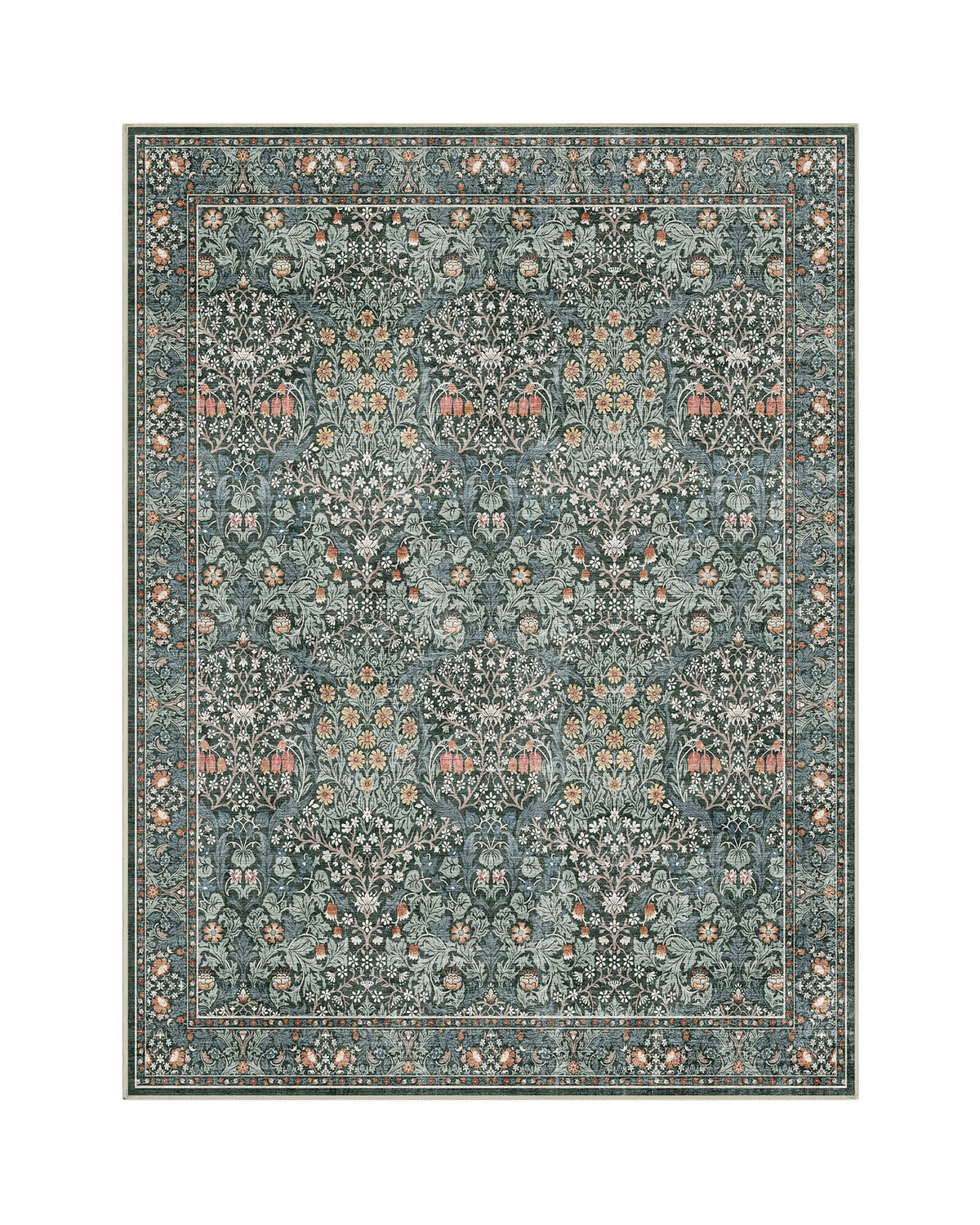
For example, imagine a vintage floral area rug with muted green, warm beige, and soft brown details.
You could use those colors throughout the room:
-
A cream sofa to complement the lighter background
-
Olive green pillows to echo the botanical pattern
-
A walnut coffee table to bring out the warmer tones
-
Natural linen curtains for a relaxed finish
-
Brass or ceramic accessories for subtle contrast
Instead of matching every item exactly, you're creating connections between different elements.
The result feels coordinated without looking overly planned.
Decorating Tip
Choose two or three colors from your rug and repeat them in smaller decorative elements throughout the room.
This creates visual consistency without requiring every piece to match.
2. Choose the Right Area Rug Size
One of the most common decorating mistakes is choosing a rug that's too small.
A small rug placed in the center of a large furniture arrangement can make the room feel disconnected.
An appropriately sized rug helps create a unified space.
Common Area Rug Sizes
| Rug Size | Best Uses |
|---|---|
| 3' x 5' | Small accent areas, compact entryways |
| 5' x 7' | Small living rooms, bedrooms, reading corners |
| 6' x 9' | Medium living rooms, bedrooms, home offices |
| 8' x 10' | Living rooms, bedrooms, dining rooms |
| 9' x 12' | Large living rooms, spacious bedrooms, open layouts |
These are general guidelines rather than strict rules.
The best rug size depends on your furniture arrangement and room dimensions.
How Much Floor Should Show Around a Rug?
In many rooms, leaving some visible flooring around the rug creates a balanced appearance.
However, there isn't one measurement that works for every space.
A larger rug that connects the main furniture pieces often looks more intentional than a smaller rug surrounded by too much empty flooring.
3. Use Area Rugs to Define Different Spaces
Area rugs are particularly useful in open-concept homes.
When the living room, dining area, and kitchen share one large space, furniture alone may not create clear visual boundaries.
Rugs can help establish separate zones without adding walls.
For example:
Living Area: A large vintage or modern area rug beneath the sofa and coffee table.
Dining Area: A separate rug underneath the dining table.
Reading Corner: A smaller rug paired with an accent chair and floor lamp.
Each rug helps communicate how the space is intended to be used.
Keep the Overall Design Connected
If you're using multiple rugs in one open space, they don't need to be identical.
Instead, look for a common element such as:
-
Similar color tones
-
Complementary patterns
-
Related textures
-
A consistent decorating style
A floral rug in the living room and a subtle geometric rug in the dining area can work beautifully together when they share a similar palette.
4. Coordinate Your Rug with Your Sofa
The sofa and area rug are often the two largest visual elements in a living room.
They should complement each other without necessarily matching.
With a Beige Sofa

Beige sofas are extremely versatile.
Consider:
-
Vintage floral rugs
-
Warm brown patterns
-
Muted green designs
-
Soft abstract rugs
-
Cream and taupe combinations
A patterned rug can add depth to a neutral sofa without making the room feel overwhelming.
With a Gray Sofa
Gray furniture works well with both warm and cool rug palettes.
For a softer appearance, consider:
-
Cream
-
Beige
-
Warm brown
-
Muted blue
-
Sage green
Warm-toned rugs can help balance the cooler appearance of gray upholstery.
With a Brown Sofa

Brown sofas pair naturally with earthy and vintage-inspired designs.
Consider rugs featuring:
-
Beige
-
Ivory
-
Muted green
-
Terracotta
-
Soft blue
-
Warm multicolor patterns
A lighter rug can create contrast, while a deeper vintage pattern can produce a more traditional, layered appearance.
Should Your Rug Match Your Sofa?
Not exactly.
A rug doesn't need to be the same color as your sofa.
In fact, a little contrast often makes the room more interesting.
The goal is to create harmony through complementary colors, textures, and patterns.
5. Decorate with Vintage Area Rugs
Vintage-inspired rugs are one of the easiest ways to introduce warmth and character into a room.
Their decorative details often include:
-
Floral medallions
-
Ornamental borders
-
Botanical vines
-
Distressed textures
-
Traditional geometric motifs
-
Softly faded colors
These patterns can make a room feel more collected and lived-in.
Vintage Rugs in Modern Rooms
You don't need traditional furniture to decorate with a vintage rug.
A vintage-inspired rug can look beautiful beneath:
-
A modern cream sofa
-
A minimalist coffee table
-
Contemporary accent chairs
-
Simple wooden furniture
The contrast between traditional patterns and modern furniture creates visual interest.
Vintage Rugs in Traditional Rooms
For traditional interiors, consider rugs with:
-
Central medallions
-
Decorative borders
-
Richer colors
-
Classic floral patterns
These details can complement wooden furniture, upholstered seating, and traditional architectural elements.
Decorating Tip
If your rug has a detailed vintage pattern, keep some surrounding textiles simpler.
This gives the rug room to stand out without competing with too many other decorative elements.
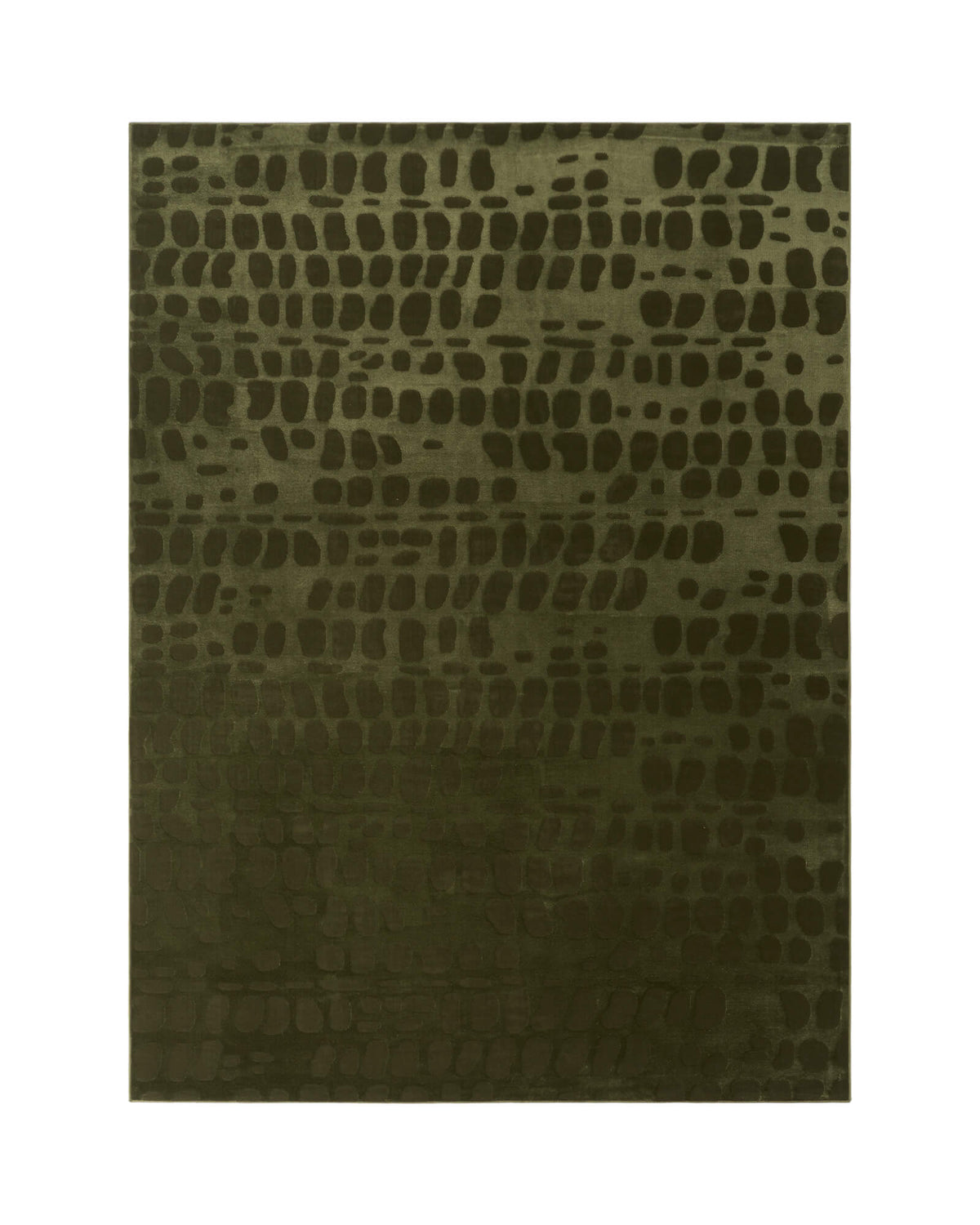
6. Use Modern and Abstract Rugs for a Contemporary Look

Modern area rugs can make a room feel clean, artistic, and visually balanced.
Popular designs include:
-
Flowing abstract lines
-
Organic shapes
-
Geometric patterns
-
Tonal textures
-
Minimalist motifs
-
Soft color transitions
An abstract rug can introduce movement into a room filled with straight furniture lines.
For example, a rug featuring curved shapes can soften the appearance of a rectangular sofa, square coffee table, and angular shelving.
How to Style a Modern Rug
Pair a modern abstract rug with:
-
Simple furniture silhouettes
-
Natural wood
-
Neutral upholstery
-
Sculptural lighting
-
Minimal decorative accessories
For a warmer contemporary look, choose beige, cream, brown, or muted earth tones rather than relying entirely on cool gray.
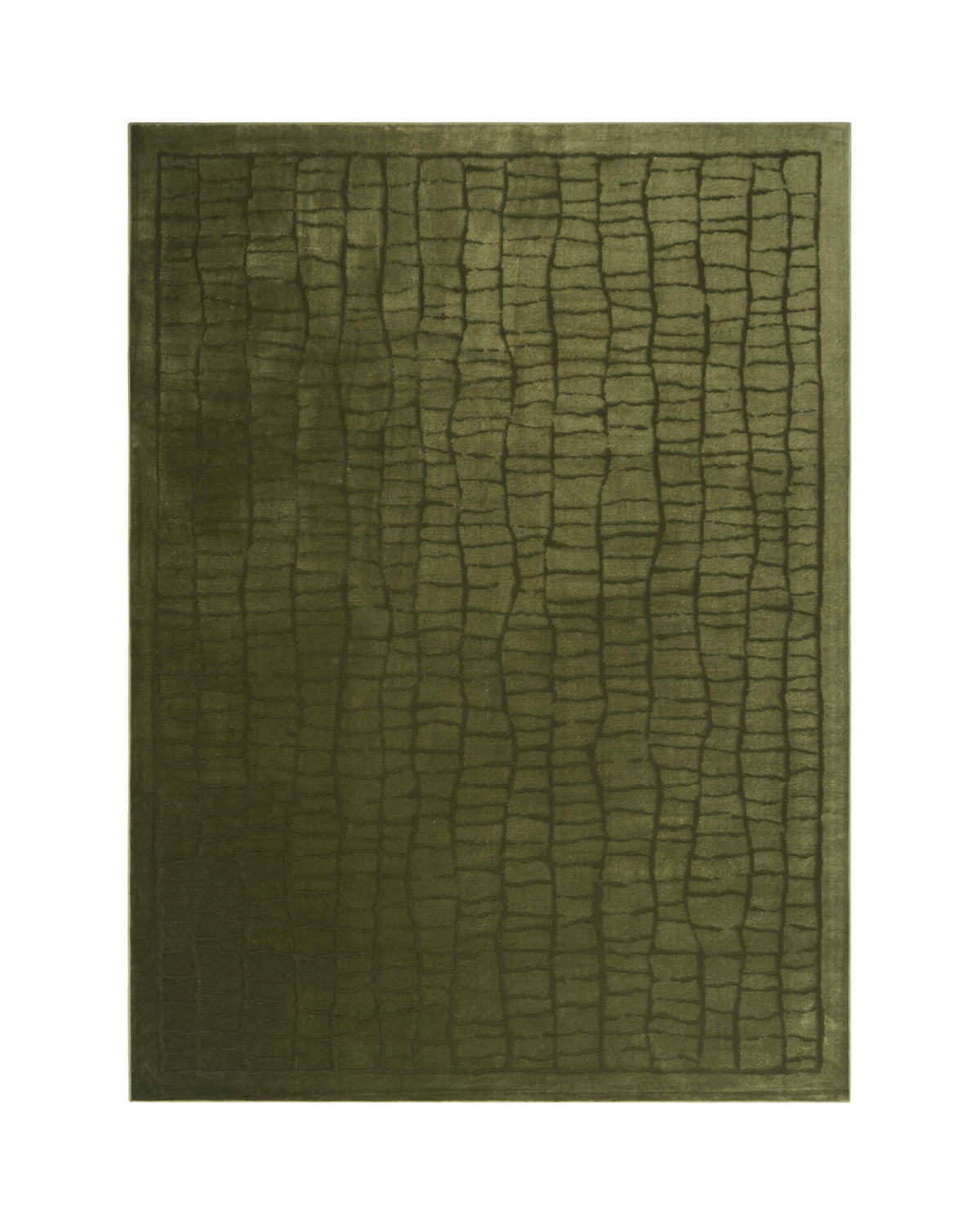
7. Add Texture with Neutral Area Rugs
A neutral room doesn't have to feel plain.
In fact, some of the most inviting interiors use relatively simple color palettes.
The key is texture.
A cream or beige rug can add visual interest through:
-
Woven details
-
Subtle raised patterns
-
Tonal variations
-
Soft surface texture
-
Organic lines
This approach works particularly well in:
-
Minimalist interiors
-
Organic modern homes
-
Japandi-inspired spaces
-
Scandinavian interiors
-
Warm contemporary rooms
Layer Neutral Textures
Imagine a living room with:
-
A cream sofa
-
A textured beige area rug
-
Linen curtains
-
A wooden coffee table
-
Ceramic accessories
-
A soft knit throw
The colors are restrained, but the room still feels layered and inviting.
That's because different materials create depth without requiring bold color.
8. Mix Patterns Without Making the Room Feel Busy
Decorating with patterned rugs can feel intimidating, especially when you already have patterned pillows, curtains, or artwork.
But different patterns can work together.
The secret is to vary their scale and maintain some visual connection.
Start with One Main Pattern
Choose one pattern to be the focal point.
For example, a large floral area rug can become the main decorative feature.
Then introduce smaller or simpler patterns through pillows and accessories.
Vary the Pattern Scale
Try combining:
-
One large-scale floral
-
One smaller geometric pattern
-
One subtle stripe
-
A few solid-colored textiles
This creates variety without making every element compete for attention.
Repeat Colors
Patterns don't need to match exactly if they share a common palette.
A green floral rug, beige striped pillow, and botanical artwork can feel connected when their colors complement each other.
Leave Some Visual Breathing Room
If your rug is highly detailed, consider solid curtains or a relatively simple sofa.
Not every surface needs a pattern.
Sometimes the quietest elements help the most decorative pieces stand out.
9. Layer Area Rugs for a Collected Look
Layering rugs is a creative way to introduce texture and personality.
Instead of using one rug, you place a smaller rug over a larger one.
This technique can work especially well in living rooms and bedrooms.
How to Layer Rugs
Start with a larger base rug.
Then place a smaller rug on top, allowing part of the base rug to remain visible.
For example:
Large neutral rug + smaller vintage patterned rug
The neutral base provides visual balance, while the smaller rug becomes the focal point.
Choose Complementary Textures
Layering works particularly well when the rugs have different visual characteristics.
Consider:
-
Neutral texture with vintage florals
-
Simple geometric patterns with softer organic designs
-
Solid colors with decorative motifs
Keep Layering Practical
Layered rugs should remain stable and flat.
Avoid combinations that create curled edges, excessive thickness, or tripping hazards.
Use suitable rug pads or other manufacturer-approved methods when needed.
For high-traffic areas or homes with young children, a single appropriately sized rug may be more practical.
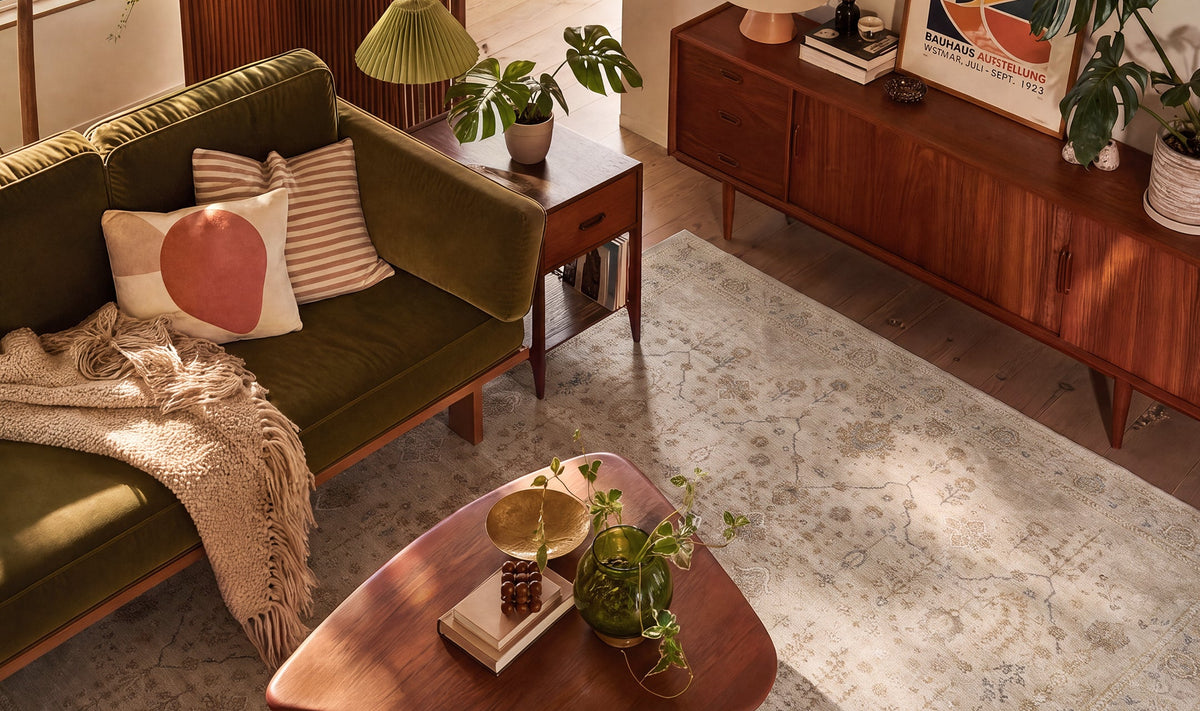
10. Decorate Your Living Room with an Area Rug
The living room is one of the most important places to use an area rug.
A rug can help define the seating area and make furniture feel connected.
Front Legs on the Rug
One popular arrangement places the front legs of the sofa and accent chairs on the rug.
This helps visually connect the seating without requiring every furniture piece to sit completely on the rug.
All Furniture Legs on the Rug
In larger rooms, you may prefer a rug large enough to accommodate the entire seating arrangement.
This creates a more expansive, unified appearance.
Small Living Rooms
Don't automatically choose the smallest rug.
A larger rug can sometimes make a compact living room feel more cohesive by connecting the furniture.
Large Living Rooms
For spacious living rooms, consider an 8' x 10' or 9' x 12' rug, depending on the furniture arrangement.
The rug should feel proportional to the seating area rather than the room's total square footage alone.
11. Decorate Your Bedroom with an Area Rug
A bedroom rug can soften the appearance of hard flooring and make the room feel more comfortable.
There are several ways to position one.
Under the Bed
A large area rug can extend underneath the bed and beyond its sides.
This creates a balanced appearance while providing a softer surface when getting out of bed.
Two-Thirds Under the Bed
Another popular arrangement places the rug beneath the lower portion of the bed.
This allows more of the rug to remain visible at the sides and foot.
Beside the Bed
For smaller bedrooms, runners or smaller rugs beside the bed can add comfort without requiring one large area rug.
Choose a Relaxing Pattern
Bedrooms often benefit from quieter designs.
Consider:
-
Soft florals
-
Muted vintage patterns
-
Cream and beige textures
-
Subtle abstract lines
-
Gentle botanical motifs
However, if you love colorful interiors, a more expressive rug can also work beautifully.
The best choice is one that supports the atmosphere you want to create.
12. Use Area Rugs in Dining Rooms, Entryways, and Home Offices
Area rugs aren't limited to living rooms and bedrooms.
They can also help define other spaces throughout the home.
Dining Room
A dining room rug should be large enough for chairs to remain on the rug when pulled away from the table.
This helps create a more comfortable and practical furniture arrangement.
For busy dining spaces, consider:
-
Low-pile construction
-
Easy-clean materials
-
Patterns that help disguise minor everyday messes
Washable rugs can be especially convenient for family dining rooms.
Entryway
An entryway rug helps make the first impression of your home feel warmer.
Look for:
-
Low pile
-
Easy maintenance
-
Suitable door clearance
-
Stable backing
-
A size proportional to the entrance
Vintage-inspired runners can look particularly inviting in narrow hallways.
Home Office
A rug can visually define your workspace and soften the appearance of office furniture.
Consider placing a rug underneath the desk or using one to define a separate reading area.
If your office chair has wheels, make sure the rug's thickness and construction are compatible with how the chair moves.
How to Decorate with Area Rugs in an Open Floor Plan
Open floor plans can be challenging because several functional areas share one continuous space.
Area rugs offer a simple solution.
Instead of using identical rugs throughout the room, choose designs that feel related.
For example:
Living Room: A vintage floral rug in muted green and beige.
Dining Room: A subtle geometric rug with similar neutral tones.
Reading Corner: A smaller textured rug in warm cream.
The rugs have different personalities, but the shared palette helps the space feel cohesive.
Avoid choosing multiple bold patterns with unrelated colors unless you're intentionally creating an eclectic look.
The goal is to establish visual zones while maintaining a natural flow between them.
How to Choose the Right Rug Color for Your Home
Color is one of the most important decorating decisions.
Start by looking at the elements already in your room:
-
Flooring
-
Sofa
-
Walls
-
Curtains
-
Wooden furniture
-
Artwork
-
Decorative accessories
Then decide whether you want the rug to blend in or stand out.
Choose a Neutral Rug for a Calm Look
Beige, cream, taupe, and warm gray can help create a relaxed foundation.
These colors work especially well when furniture or artwork already provides visual interest.
Choose a Colorful Rug as a Focal Point
A green, blue, terracotta, or multicolor rug can introduce personality into a neutral room.
Repeat one or two colors from the rug in pillows, artwork, or accessories to create balance.
Consider Your Flooring
Light wood floors can pair beautifully with warm browns, greens, and vintage-inspired patterns.
Dark wood floors often benefit from lighter rugs that create contrast.
Gray flooring can feel warmer when paired with beige, cream, or earthy tones.
There are no absolute rules, but contrast and color temperature can help guide your choices.
How to Decorate with Area Rugs on a Budget
You don't need to replace all your furniture to refresh a room.
An area rug can create a noticeable change without requiring a complete redesign.
Try these budget-friendly ideas:
-
Keep your existing sofa and choose a rug with a new color palette.
-
Replace a small rug with a larger one that better fits the furniture.
-
Use a patterned rug to add interest to a neutral room.
-
Coordinate existing pillows with colors from the rug.
-
Rearrange furniture to create a more balanced layout.
-
Move a suitable rug from one room to another for a fresh look.
Sometimes the biggest improvement comes from changing how the room is arranged rather than buying more furniture.
Common Mistakes When Decorating with Area Rugs
Choosing a Rug That's Too Small
A small rug can make furniture look disconnected.
Measure your seating arrangement before choosing a size.
Matching Everything Too Closely
Your rug doesn't need to match your sofa, curtains, and pillows exactly.
Complementary colors and varied textures often create a more natural appearance.
Using Too Many Competing Patterns
If every element is equally bold, the room may feel visually overwhelming.
Choose a focal pattern and allow other elements to support it.
Ignoring Furniture Placement
A beautiful rug can still look awkward if it's positioned incorrectly.
Consider how the rug connects the furniture and defines the space.
Forgetting About Everyday Maintenance
A rug should fit your lifestyle.
If your home includes pets, children, or frequent entertaining, easy-clean and washable options may be more practical.
Overlooking Rug Stability
A rug that slides, wrinkles, or curls at the edges can affect both appearance and comfort.
Choose suitable backing or a compatible rug pad when needed.
FAQs About Decorating with Area Rugs
How do you decorate a room with an area rug?
Start by choosing a rug that fits the room's furniture arrangement. Use its colors, patterns, and textures to guide your choice of pillows, curtains, artwork, and accessories. The rug should help connect the room rather than feel like an isolated decorative piece.
Should you choose the rug or furniture first?
Either approach can work. If you already have furniture, choose a rug that complements it. If you're decorating from scratch, selecting a rug first can help establish the room's color palette and overall style.
Should an area rug match the sofa?
Not necessarily. Rugs and sofas can complement each other through shared undertones, contrasting colors, or related textures. Exact color matching isn't required.
Can you mix patterned rugs in the same room?
Yes. Mixing patterns can work beautifully when the rugs share complementary colors and have different pattern scales. Avoid making every pattern equally bold unless you're intentionally creating an eclectic interior.
How do you decorate with a vintage area rug?
Pair a vintage-inspired rug with furniture that complements its colors and decorative details. Vintage rugs work well with both traditional furniture and clean-lined modern pieces.
How do you decorate with a neutral area rug?
Use texture, natural materials, layered textiles, and subtle color variations to create visual interest. Neutral rugs work especially well in minimalist, Scandinavian, organic modern, and warm contemporary interiors.
Can you layer two area rugs?
Yes. A smaller rug can be layered over a larger base rug to add texture and visual interest. Make sure both rugs remain stable and avoid creating raised edges or tripping hazards.
Do area rugs make a room look bigger?
They can. An appropriately sized rug can visually connect furniture and make a room feel more unified. A rug that's too small may have the opposite effect.
Should all the rugs in your house match?
No. Rugs throughout a home don't need to be identical. Choosing complementary colors, patterns, or textures can create continuity while allowing each room to have its own personality.
What color area rug goes with everything?
Neutral colors such as beige, cream, taupe, and warm gray are versatile choices. However, a multicolor rug with muted tones can also coordinate with a wide range of furniture and accessories.
How do you decorate a small living room with an area rug?
Choose a rug that connects the main furniture pieces rather than leaving them visually separated. Light colors, subtle patterns, and appropriate sizing can help create a balanced appearance.
How do you make an area rug the focal point of a room?
Choose a rug with a distinctive pattern, color, or texture, then keep surrounding furniture and accessories relatively simple. Repeat a few colors from the rug elsewhere in the room to create cohesion.
Final Thoughts
Decorating with area rugs is about more than finding something beautiful to place on the floor.
A rug can establish the color palette, define the furniture arrangement, introduce texture, and give a room its own personality.
The most successful spaces usually begin with a few simple decisions:
Choose the right size. Coordinate colors thoughtfully. Balance patterns and textures. Position furniture intentionally.
From there, let your personal style guide the details.
A vintage floral rug can make a modern living room feel more collected. A neutral textured rug can soften a minimalist bedroom. A colorful abstract design can bring energy into a simple space.
And in an open-concept home, different rugs can help create distinct areas while keeping everything visually connected.
The best area rug isn't necessarily the boldest, softest, or most expensive.
It's the one that makes your furniture, colors, and everyday routines feel like they belong together.
Related Articles
Decorate Your Home with MontVooRugs
From vintage-inspired florals to modern abstract patterns and warm neutral designs, MontVooRugs area rugs are made to bring comfort, personality, and visual warmth into everyday spaces.
Explore washable area rugs with soft, low-pile surfaces and non-slip backing—designed for real homes with kids, pets, and all the moments in between.